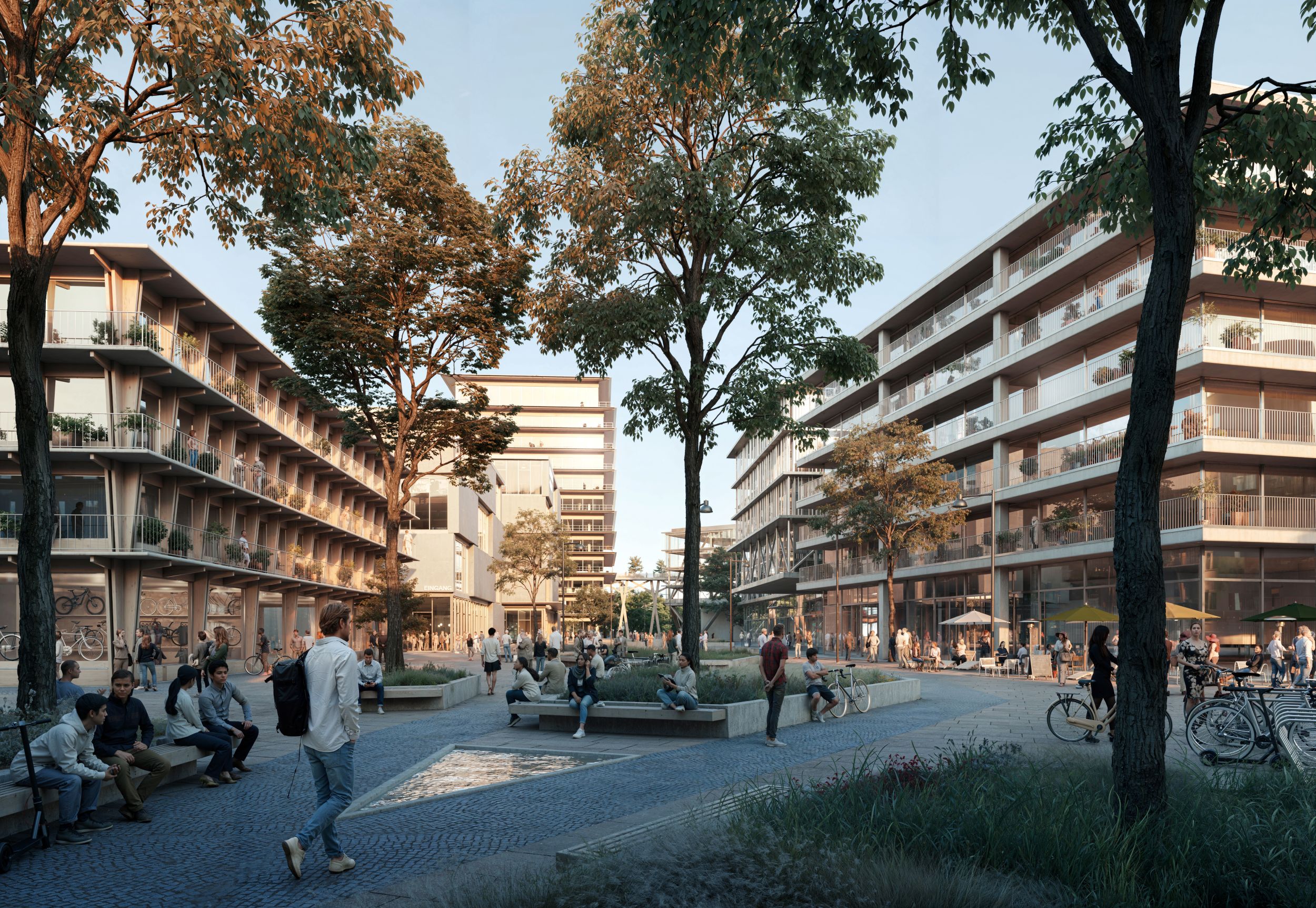
For the centrally located site in Heilbronn’s city center, the competition calls for the development of an urban and architectural reorganization that more closely interlinks the education campus, the inner city, and the urban community. In doing so, the City of Heilbronn aims to strengthen its role as a city of knowledge. High-quality architecture and green urban spaces are intended to create sustainable added value for the city center.
Education Campus South, Heilbronn
- Year: since 2025
- Category: Revitalization
- Use: Business, Office, Other use, Education, Reside
- Construction: Wood hybrid
-
More details
Scope
Competition
Location
Bildungscampus Süd
Heilbronn
Gross Floor Area
80.000 m²
Client
City of Heilbronn
In collaboration with arealM Landscape
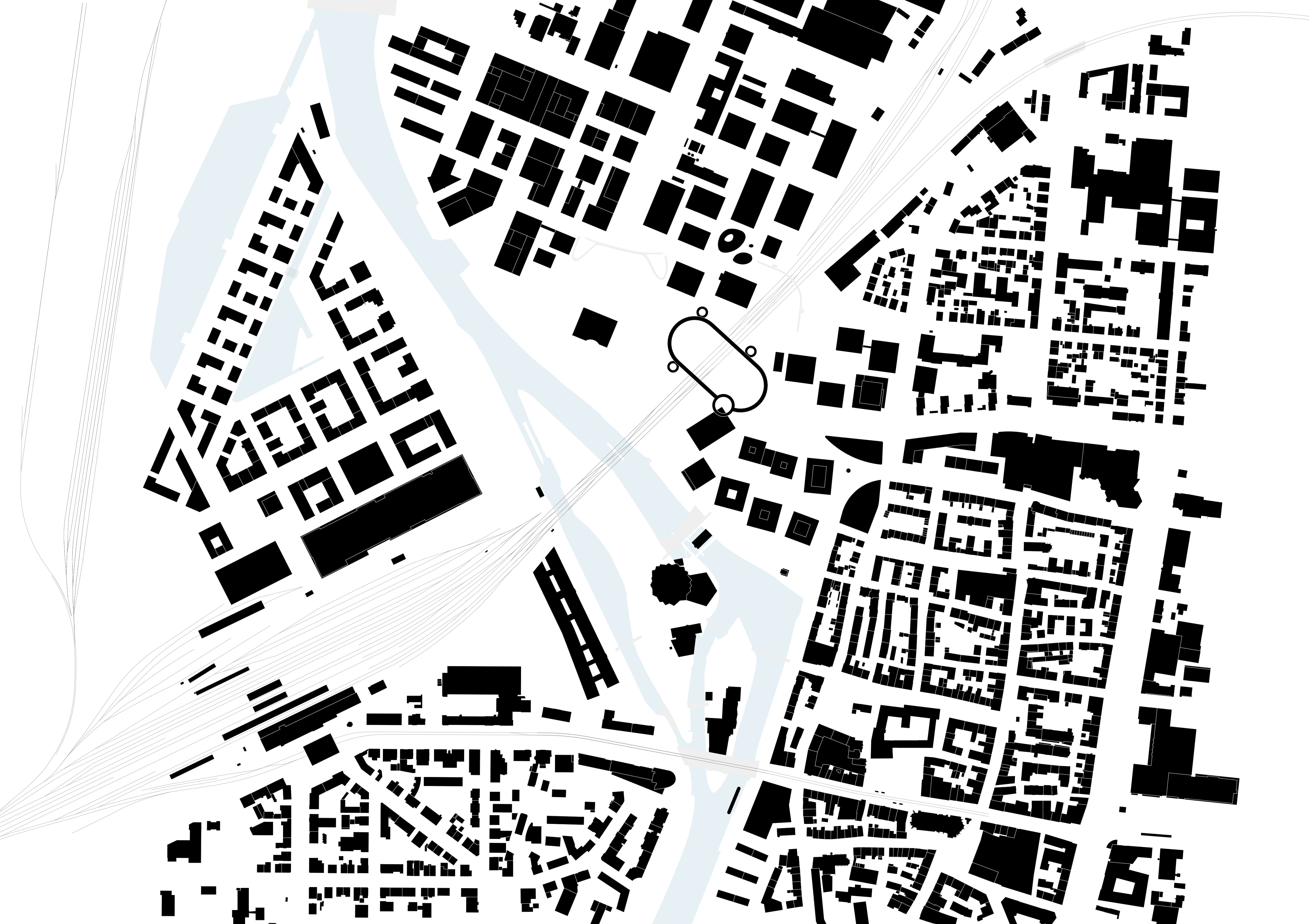
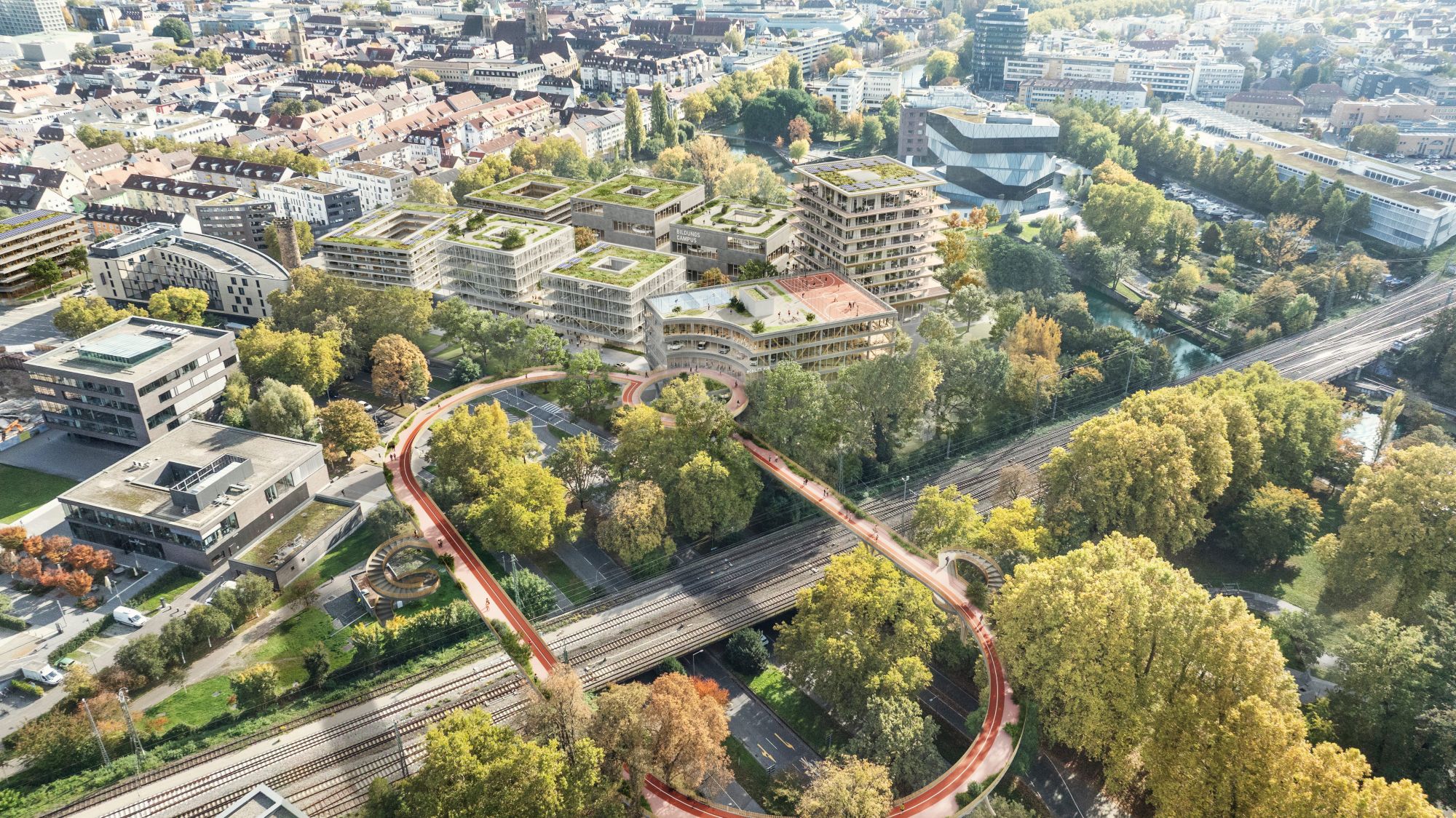
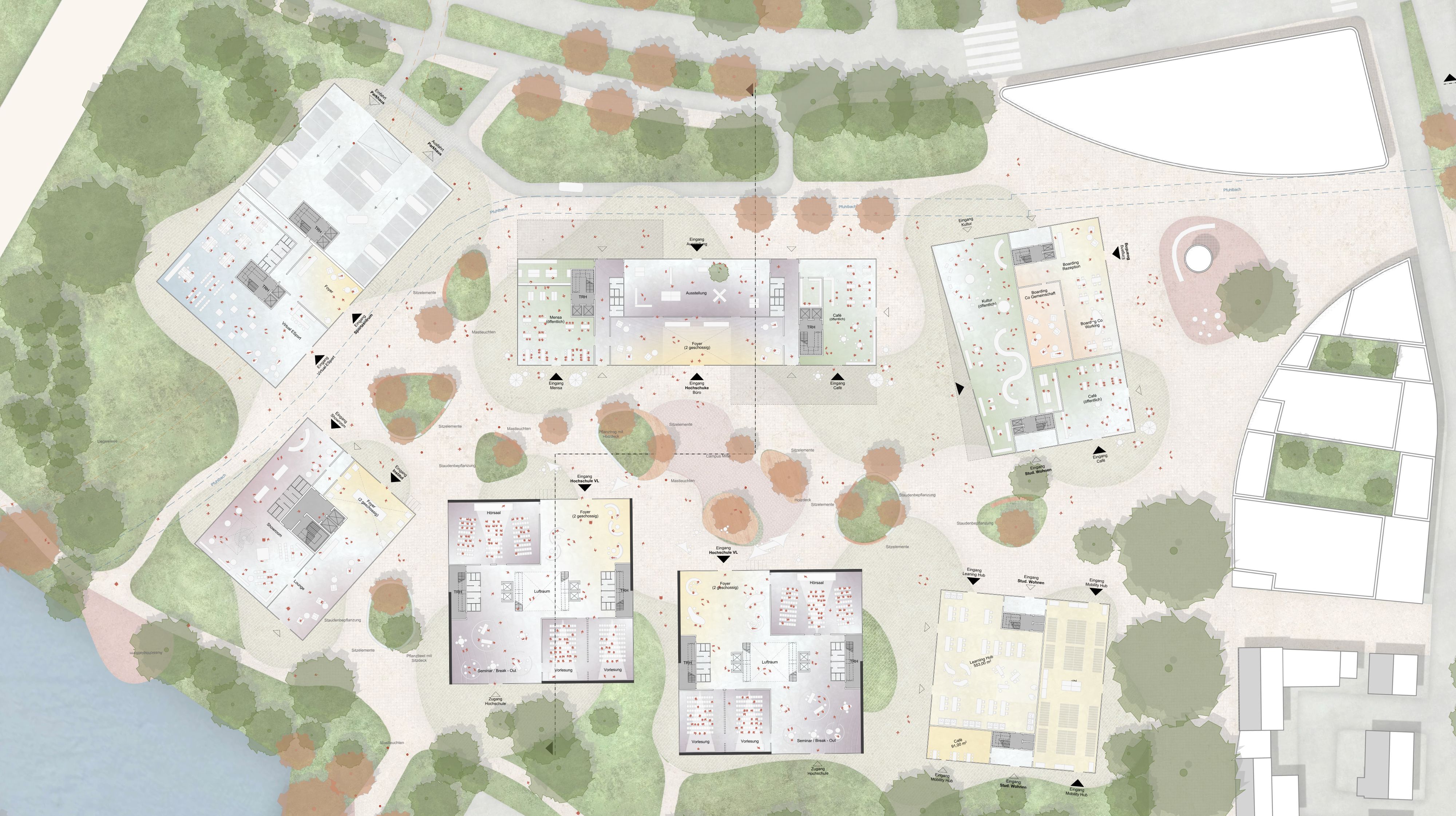
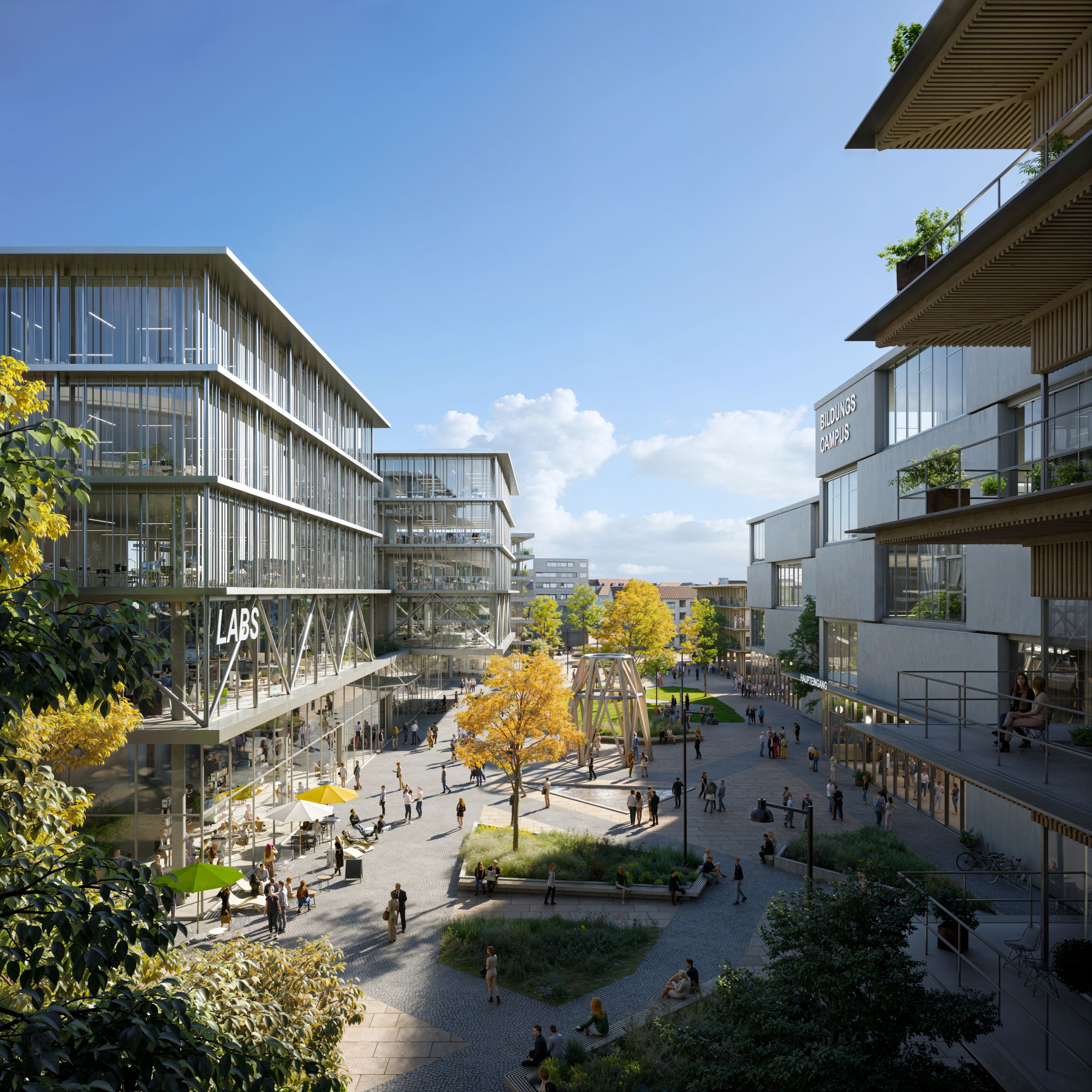
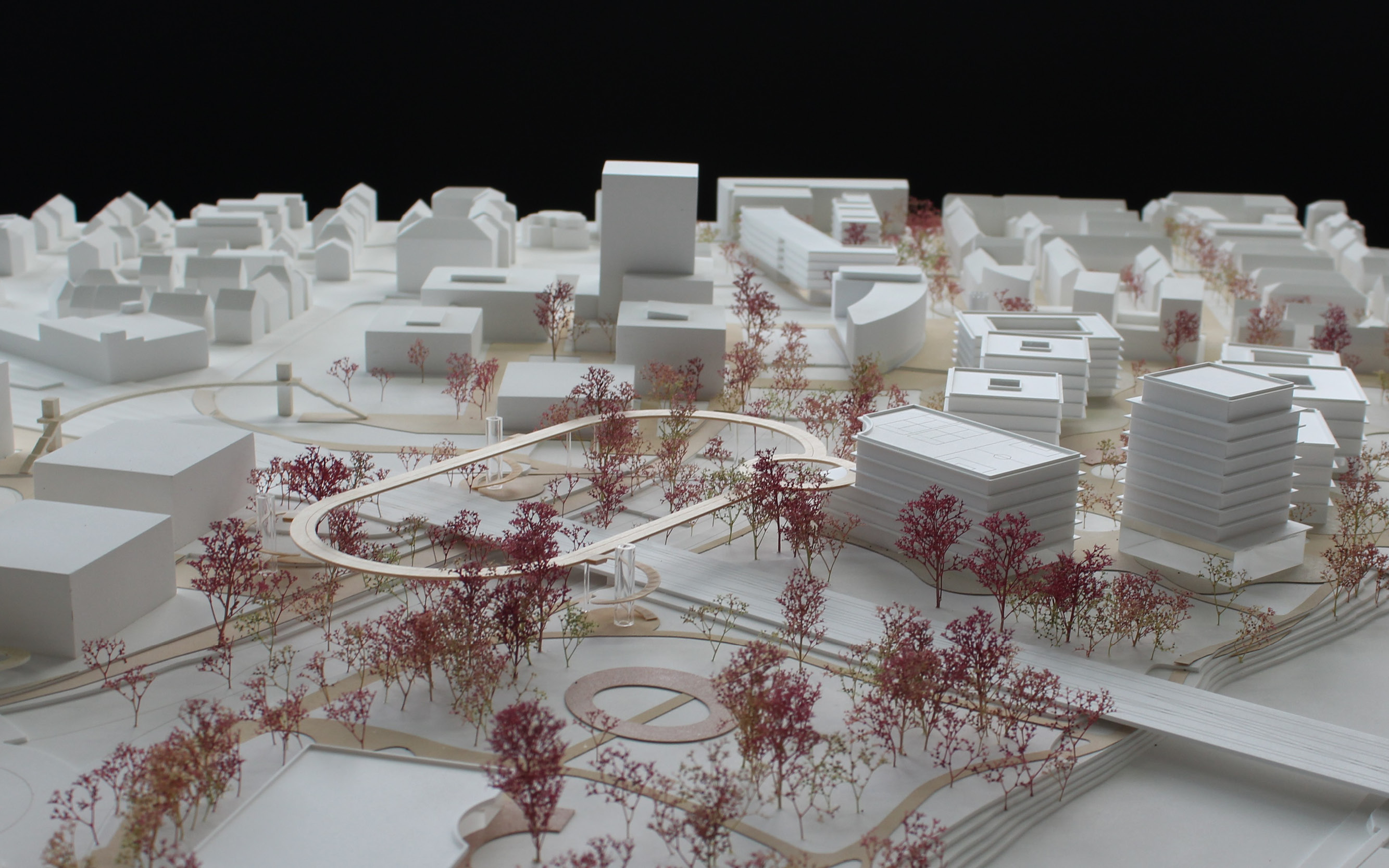
In our design, we have reimagined the campus and interconnected its various areas. The so called Loop, a gangway floating at treetop level, brings together all campus areas that were previously dispersed. Nature and urban space merge into one. The newly created campus forms a key node between the university district and the historically evolved old town of Heilbronn. The Neckar riverbank is integrated into the redesign of the green space as an urban beach and thus becomes part of the new campus park.
Urban Design
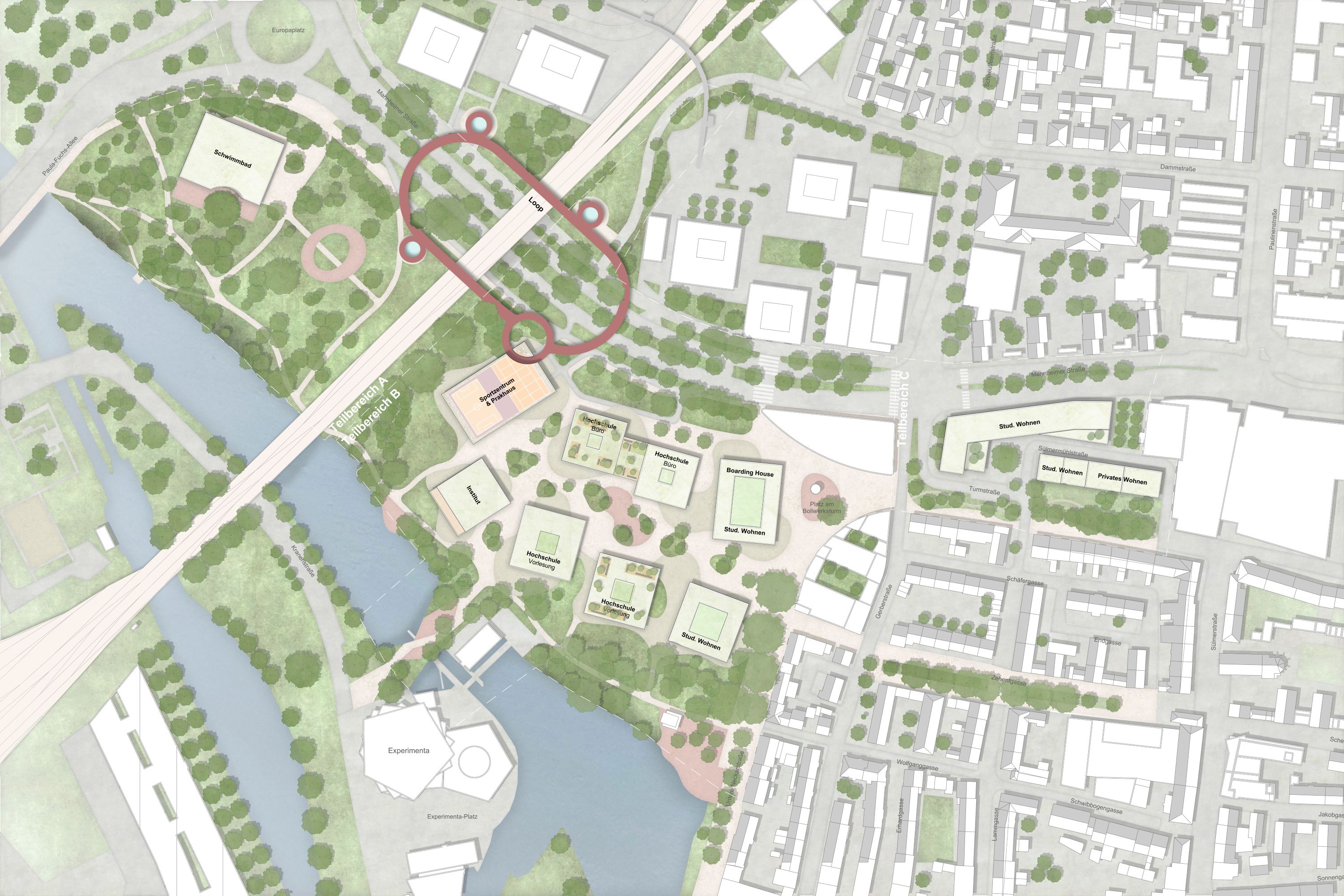
The existing green spaces are preserved and extended along the river promenade, creating continuous natural corridors for recreation and ecological diversity. A row of trees along Mannheimer Straße functions as a green buffer zone that separates the main road from the campus and thus minimizes noise and emissions.
Within the campus, planted green areas serve as quiet zones and informal meeting points, while the open spaces in front of the student residences are designed both as visual barriers to the internal streets and as relaxing outdoor areas for residents.
Access and mobility
The campus is accessible on foot and by bicycle. There is no private car traffic within the campus. Service and delivery access is provided from Mannheimer Straße and is located in the northern part of the campus. Vehicular access to parking follows the existing situation and is organized from Mannheimer Straße at the intersection with the railway tracks. Access to the boarding house is provided from the central area of the Bollwerksturm and creates use specific synergies with the adjacent hotel.
“Loop” as an element of integration
The “Loop” is fully accessible via stairways and elevator facilities. It can be used both by pedestrians and cyclists. The urban design concept incorporates the connection to the Experimenta building. The narrow and uninviting existing bridge is replaced by a new landscape bridge. The landscape concept is extended toward the urbanistically significant Experimenta building. Here as well, the guiding idea is connectivity and the linking of all surrounding areas. The hydroelectric power plant is woven into the overall design concept.
Program
Under Planning Area A, the roller skating stadium is replaced by a swimming pool. The footprint of the existing building continues to be used. The existing tree population is integrated into the building design. The façade and the canopy respond to the site conditions and follow the form of the protected trees.
In Planning Area C, student housing as well as private residential use is provided. The range of uses is complemented by retail and public functions such as cafés. The residential program is small scale in character, while also offering family oriented housing. Parking is accommodated underground in a parking garage.
Sustainability
The primary objective is to largely reduce soil sealing across the site. The buildings minimize their footprint through the separation of individual building volumes. Rainwater runoff can infiltrate within the remaining open areas. In addition, roof surfaces are activated and designed as retention areas. They absorb additional rainwater and release it into the drainage system with a time delay. Roof surfaces also offer an extended opportunity to promote biodiversity throughout the entire site.
Another key aspect is the avoidance of extensive interventions in the ground. The demand for technical and storage spaces is limited to a maximum of one basement level, thereby minimizing impacts on the soil. In particular, no structural intervention is made in the area of the Pfühlbach; instead, construction is carried out carefully around the stream using pile structures.
The buildings themselves can be constructed using renewable raw materials or recyclable materials, such as timber hybrid structures. However, the specific construction methods are to be defined in subsequent planning phases.